In 2021 i joined a research team as part of Univerity of Birmingham’s Systems Modelling and Quantitive Biomedicine group, developing new software to detect remaining leukaemia cancer cells (know as measurable residual disease or MRD) within the bone marrow of patients with acute myeloid leukemia (AML) after treatment. In particular, the technology is looking at whether detection process can be automated through mathematical and statistical refinements to improve test accuracy and to make future testing much more rapid. This would allow MRD to be picked up earlier so that outcomes for AML patients can be improved.
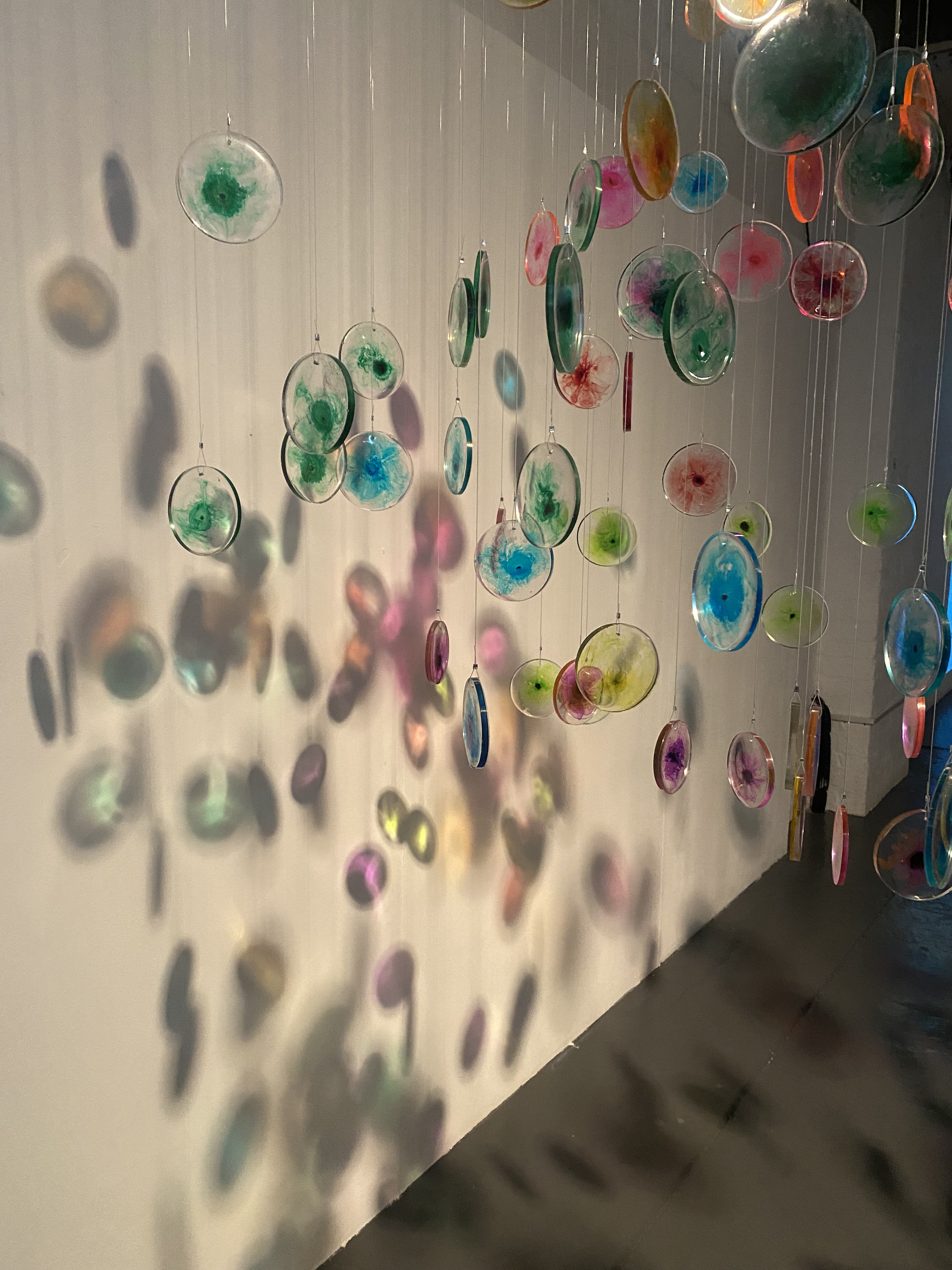
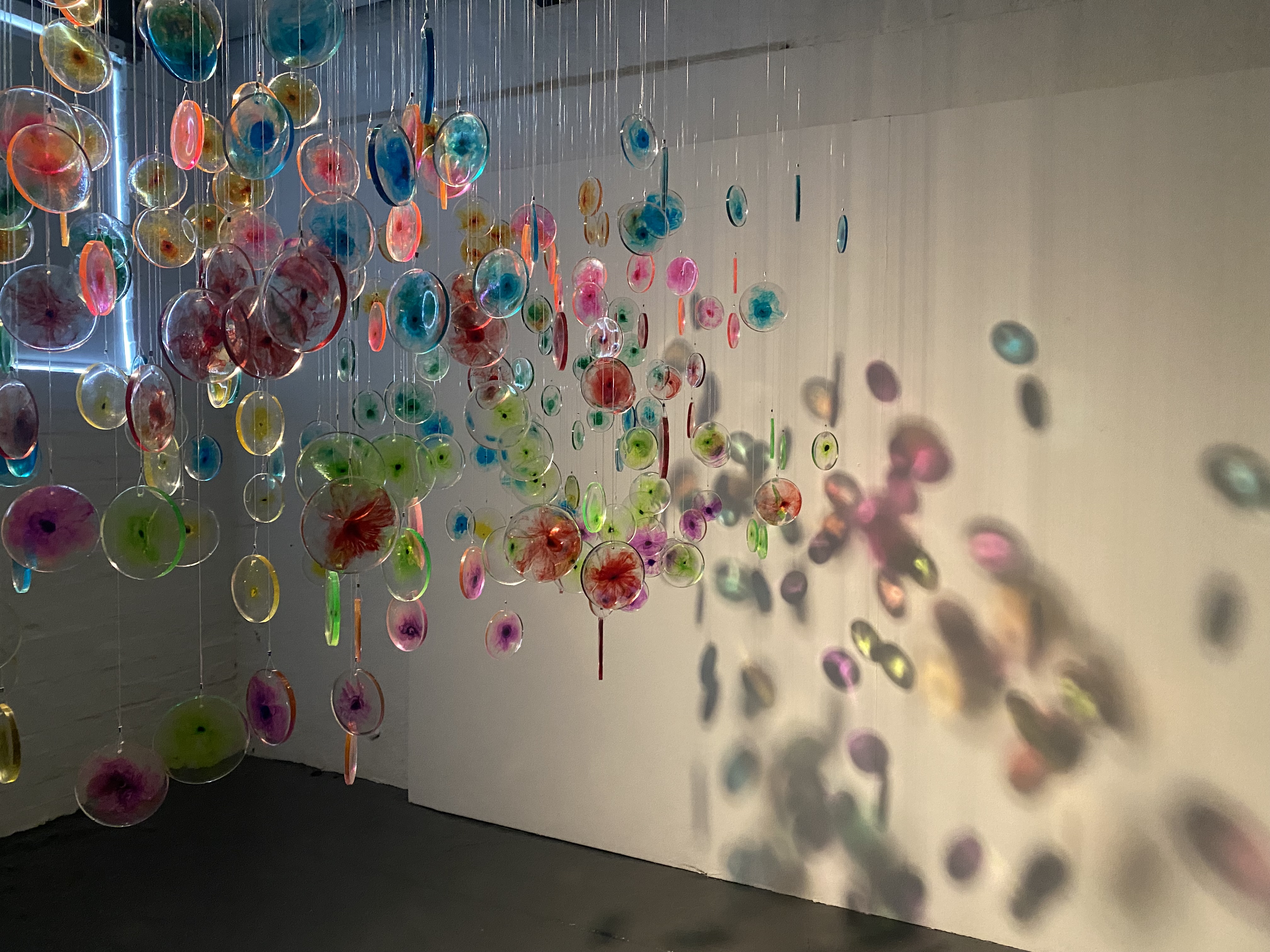
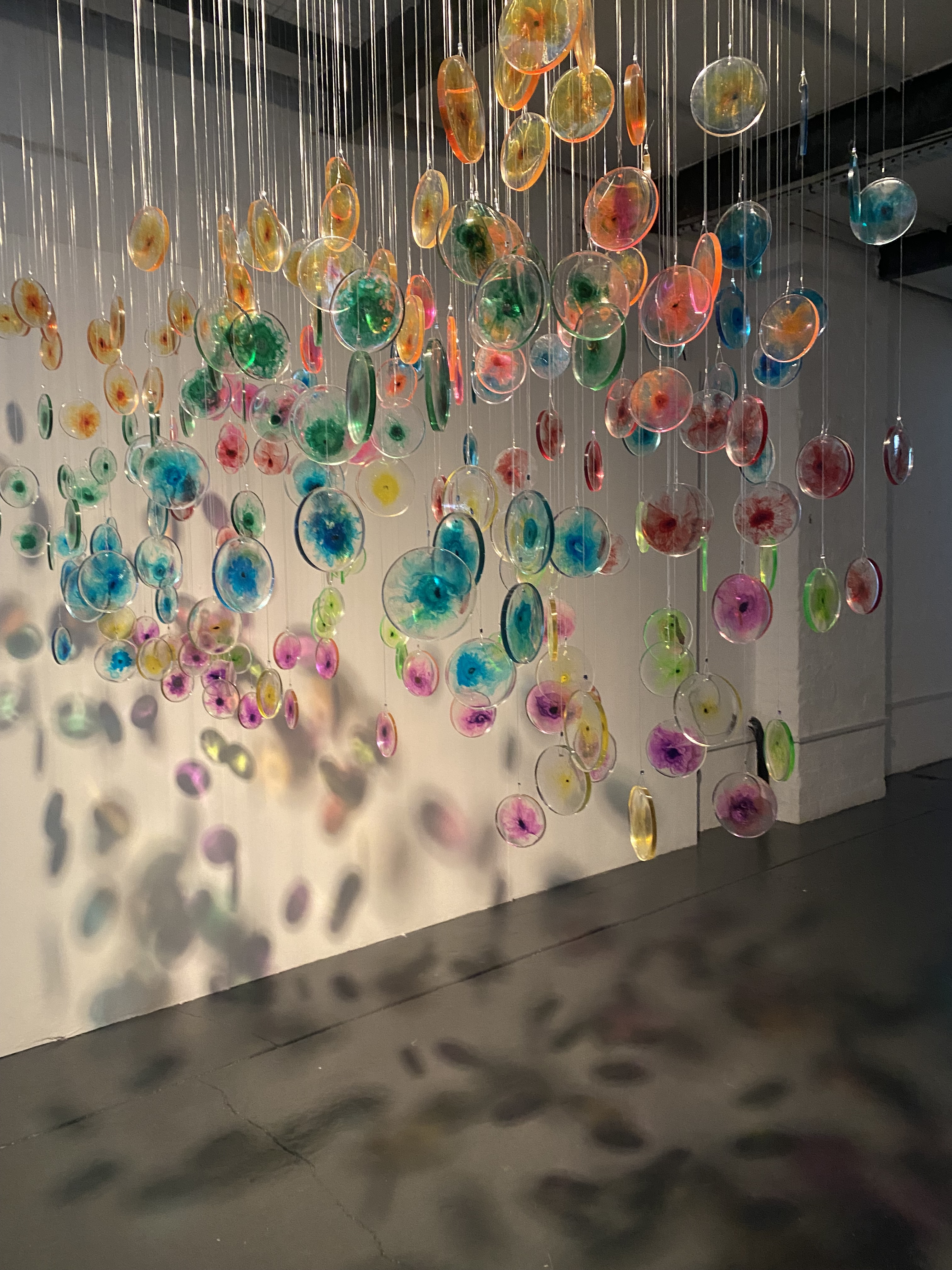
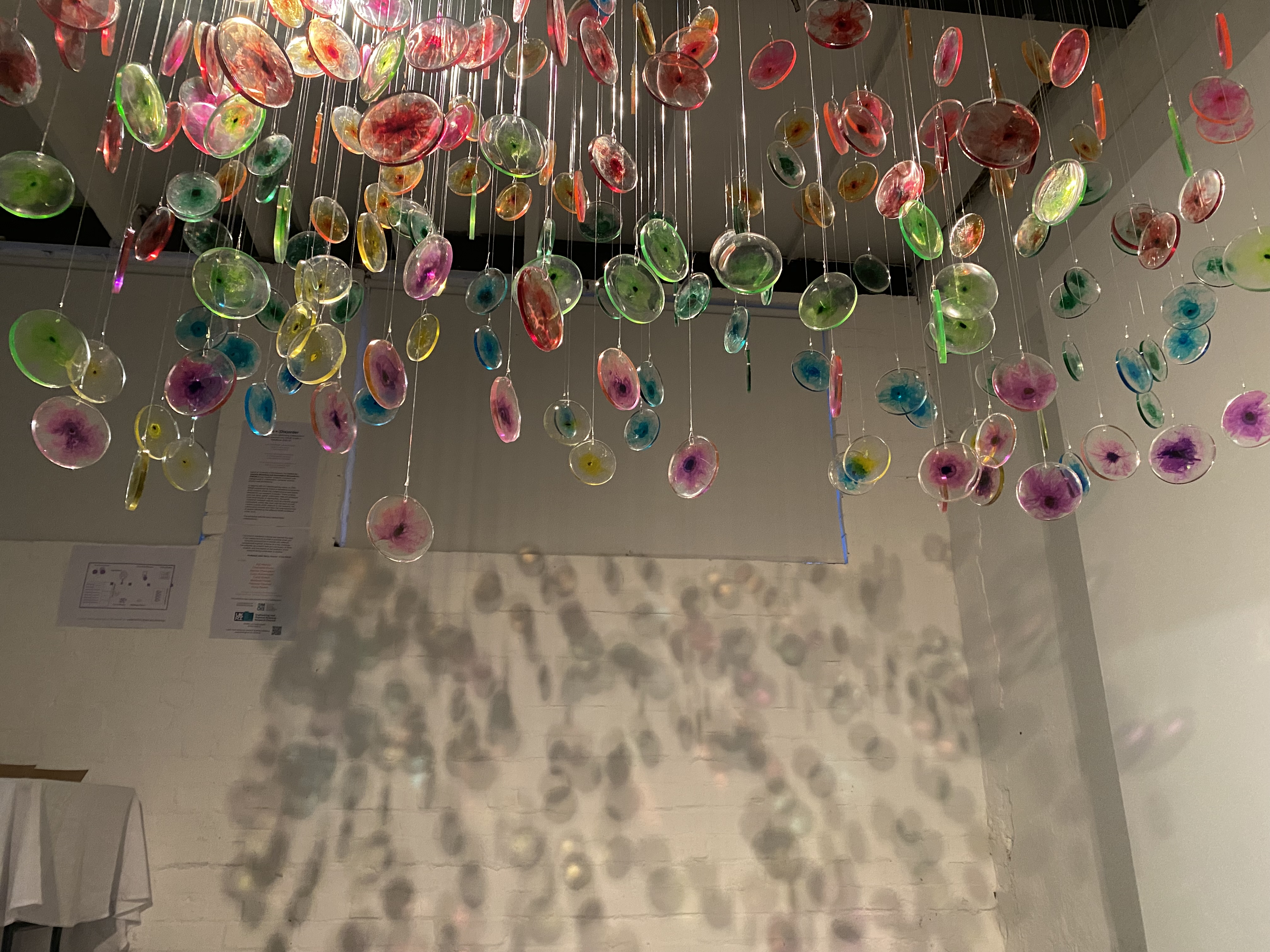
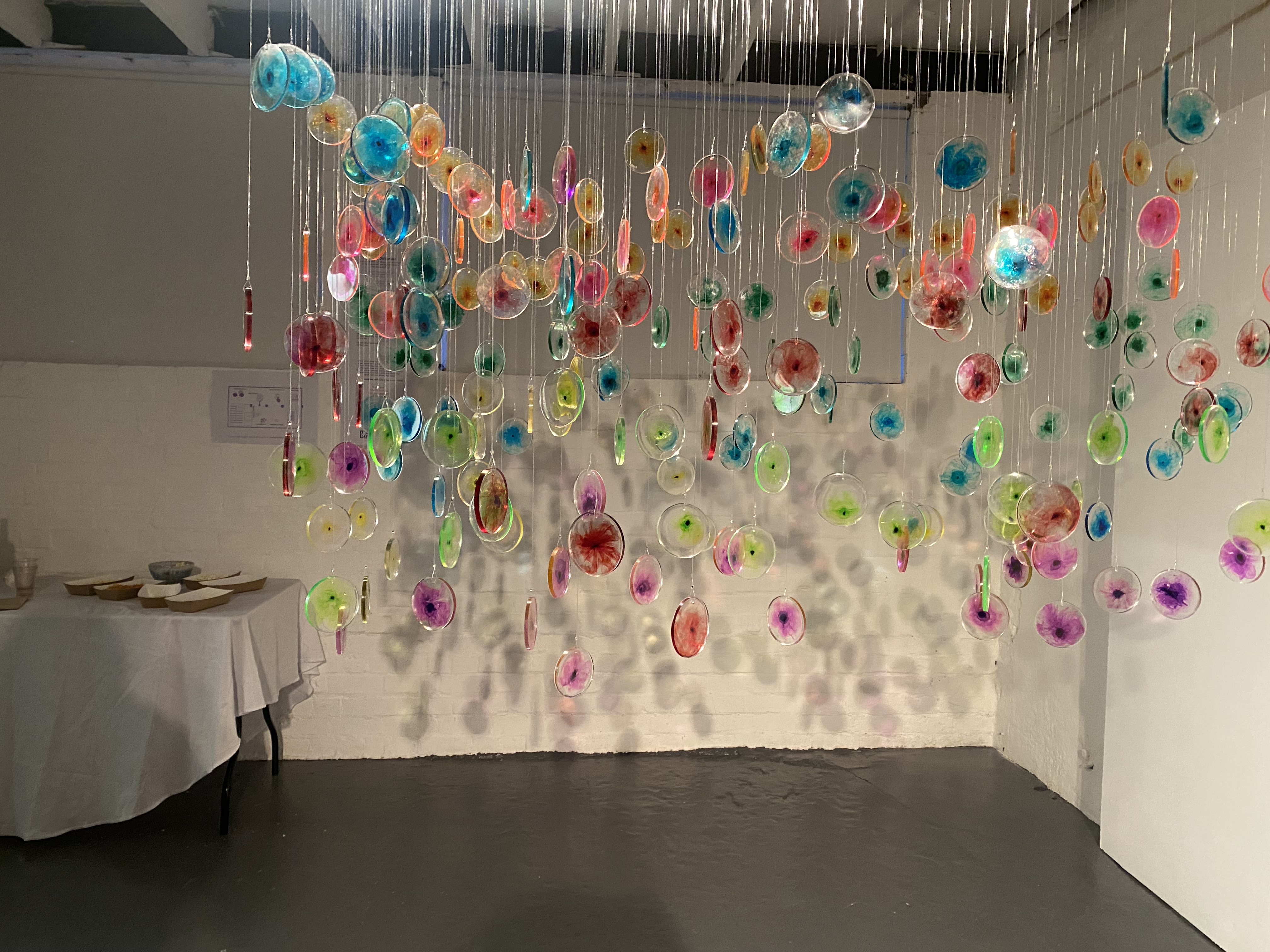
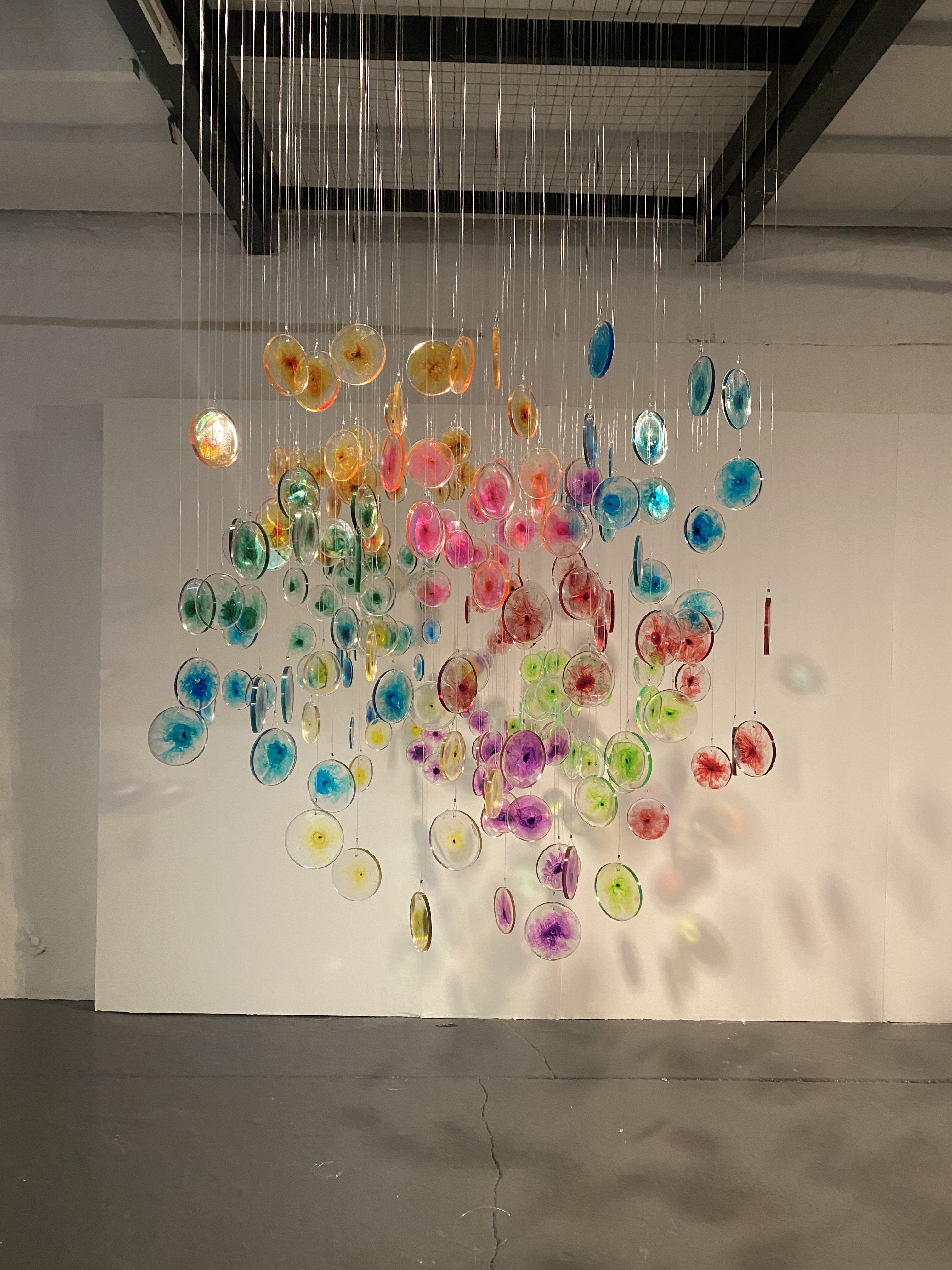
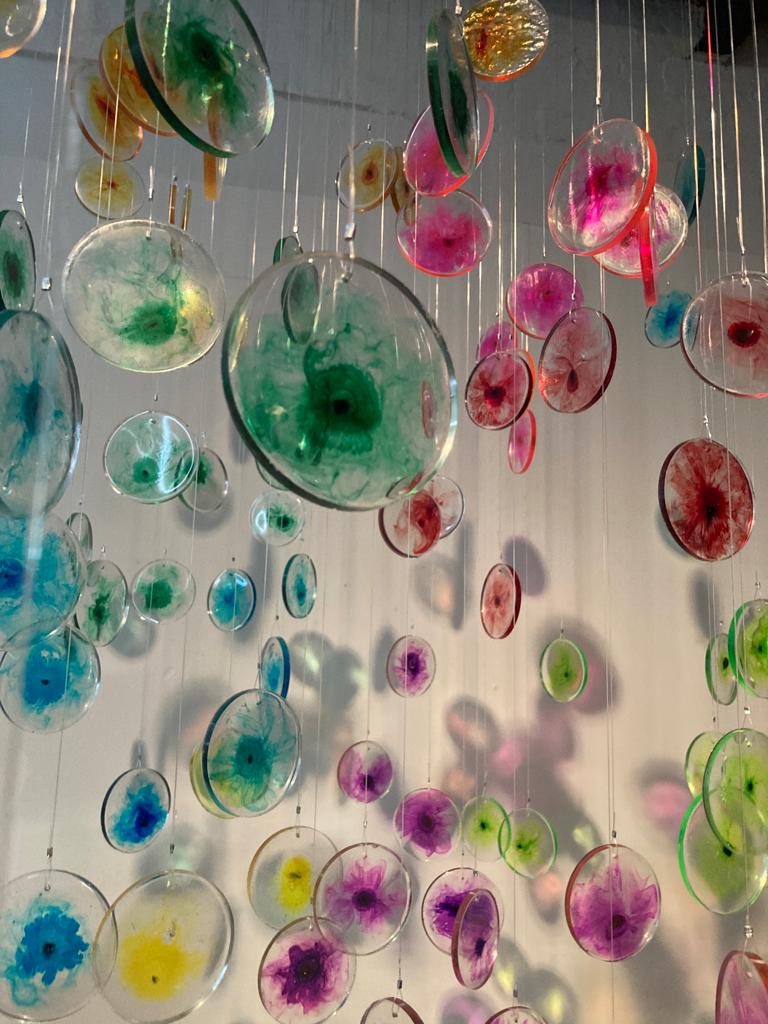
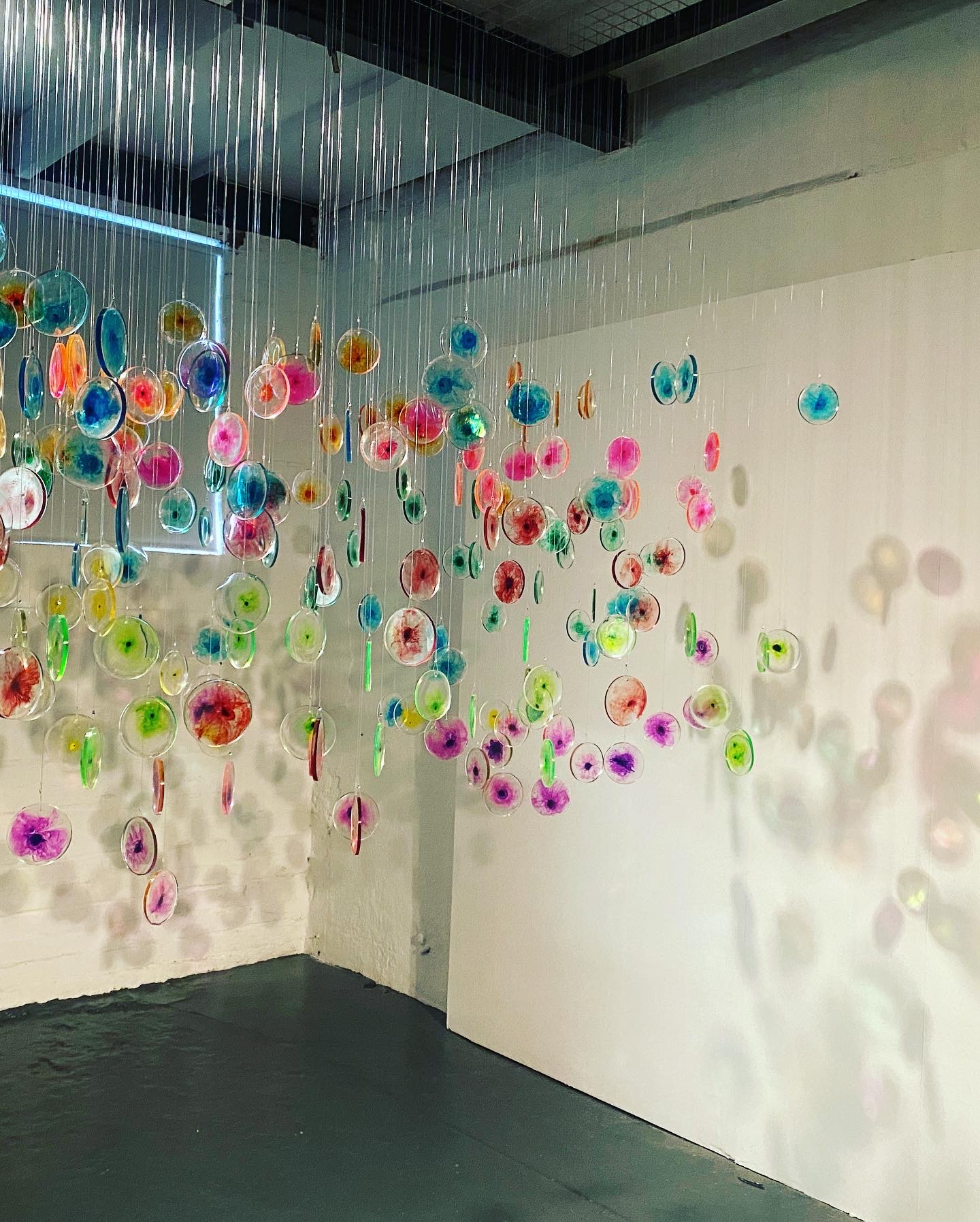
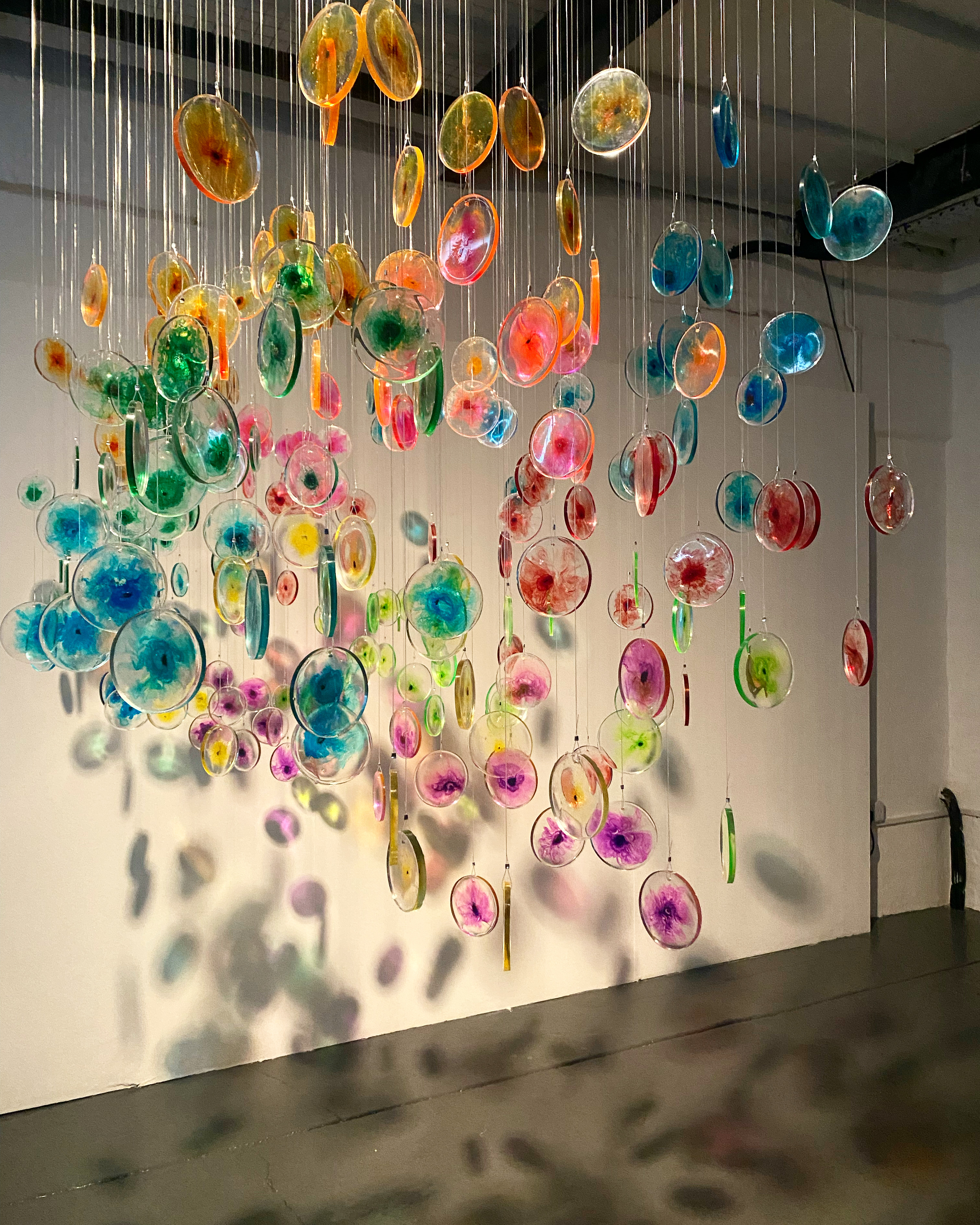
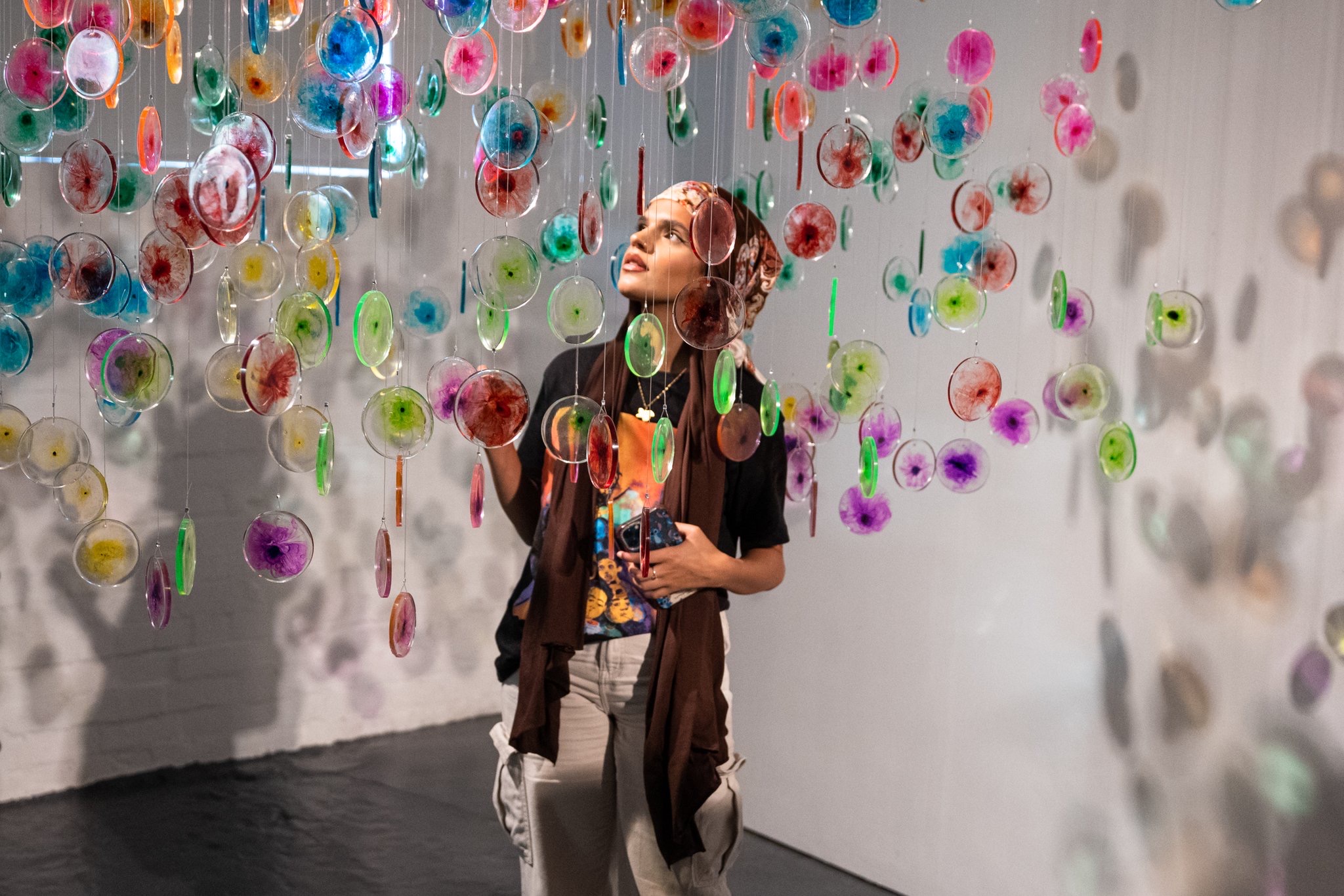
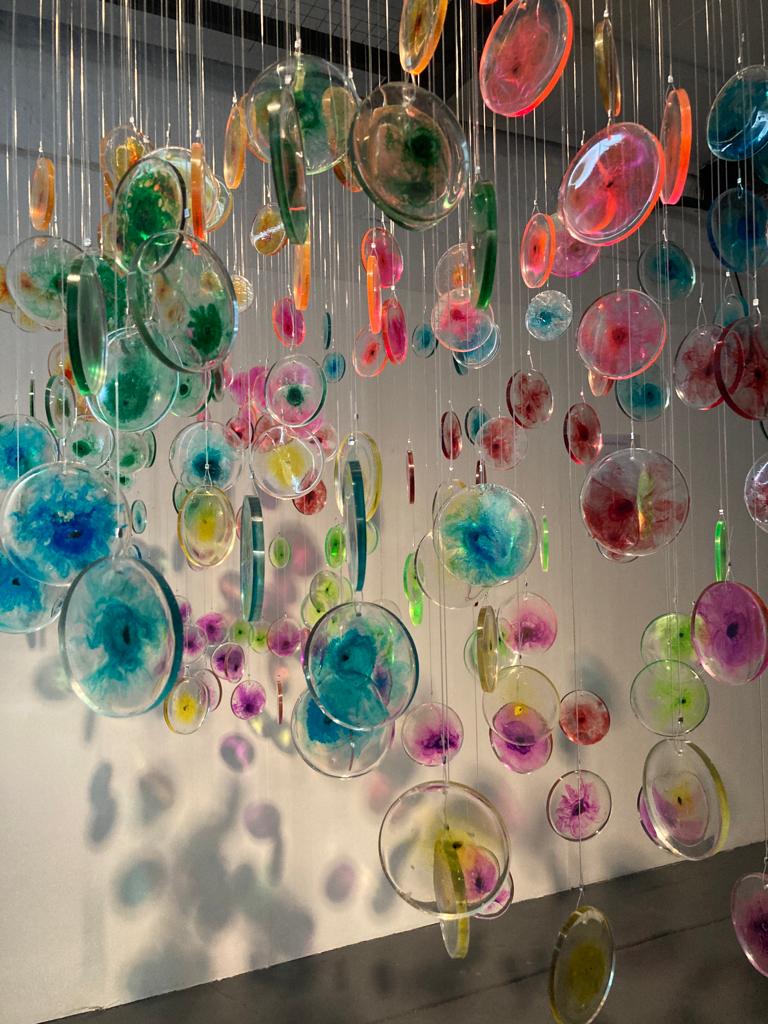
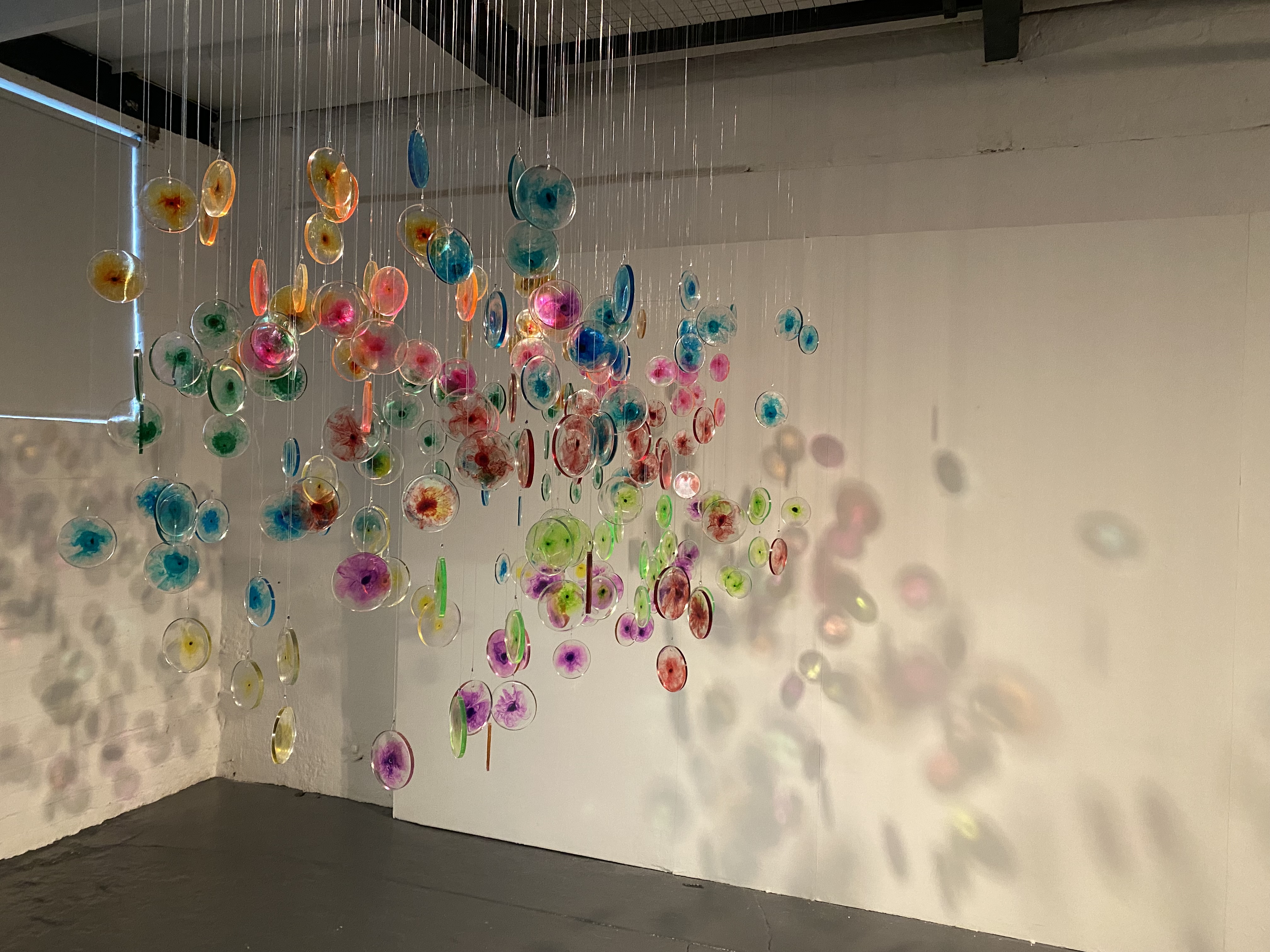
I visited the haematology lab where she was able to observe the flow cytometry technique used to ‘dye’ cells with fluorescent coloured inks prior to them undergoing testing. I was immediately struck by how these brightly coloured formations are used to identify whether someone had or still has leukaemia, yet the patient never gets to view these colourful displays themselves. The new software effectively compresses the visualisations taken from many different patient samples into one cluster of colours or cells that can be used to further improve the way that leukaemia cells are identified. Through their research, I noted the scientists were shifting perspective on the way they look at the results of the testing and it is this compression of the visuals and change of view that she chose to develop further in her work through making fluorescent cells – in the same colour scheme used within the science – that can be hung to reflect clusters and perspective. Face on the cluster gives the perspective of the scientist, viewed perpendicularly we see the individual data points reflecting the individual.
Throughout the project i also spent time speaking with people who have acute myeloid leukaemia, learning about their journey towards treatment and the ongoing monitoring. In particular she asked them about their impressions of the visualisations and how it made them feel about their diagnosis. One patenting describing the identification of leakemic cells similar to ‘Pinpoint a start in the sky’, a statement that eventually link with her final work. Understanding the challenge of the cancer detection, the aspirations of this future research and methods to get there were inspiring and a point of reflection to those she spoke to. The final work was exhibited at Centrala Space Digbeth in September 2022.
 Charlotte Dunn